Understanding Key Fitness Metrics: A Deep Dive into VO2 Max, HRV, RHR and More
- Tanner Kuketz

- Jan 13
- 3 min read
Tracking fitness progress goes beyond counting steps or hours spent at the gym. To truly understand your body’s performance and health, you need to look at specific physiological metrics. These numbers provide insight into your cardiovascular health, endurance, recovery, and metabolic efficiency. This post explores some of the most important fitness metrics, explaining what they mean and how they can help you improve your training and overall well-being.
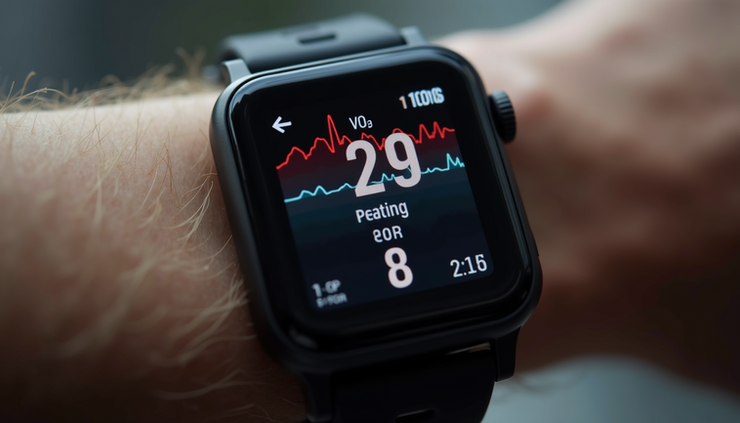
VO2 Max: The Gold Standard of Aerobic Fitness
VO2 Max measures the maximum amount of oxygen your body can use during intense exercise. It reflects your aerobic capacity and endurance potential. A higher VO2 Max means your body can deliver and use oxygen more efficiently, which is crucial for activities like running, cycling, and swimming.
How to measure: Typically assessed through a graded exercise test in a lab or with some advanced fitness trackers.
Why it matters: It helps athletes tailor training intensity and track improvements.
Example: Elite endurance athletes often have VO2 Max values above 70 ml/kg/min, while average adults range between 30-40 ml/kg/min.
Improving VO2 Max involves consistent cardiovascular training, including interval workouts and long steady-state sessions.
Resting Heart Rate (RHR) and Heart Rate Recovery (HRR)
Resting Heart Rate is the number of heartbeats per minute when you are at complete rest. It indicates your heart’s efficiency; a lower RHR usually signals better cardiovascular fitness.
Typical values: Healthy adults often have RHR between 60-80 bpm, while well-trained athletes may have rates as low as 40 bpm.
How to track: Measure first thing in the morning before getting out of bed.
Heart Rate Recovery measures how quickly your heart rate returns to normal after exercise. Faster recovery suggests a strong cardiovascular system.
Example: A drop of 20 beats or more within the first minute after stopping exercise is considered good.
Why it matters: It can indicate your fitness level and how well your body handles stress.
Heart Rate Variability (HRV): A Window into Your Autonomic Nervous System
HRV is the variation in time between heartbeats. Unlike RHR, which counts beats, HRV looks at the subtle differences in timing. It reflects how well your body manages stress and recovers.
High HRV: Indicates good recovery, resilience, and balanced nervous system.
Low HRV: May suggest fatigue, stress, or overtraining.
Athletes use HRV to adjust training loads and avoid burnout. You can measure HRV with specialized apps and heart rate monitors.
Anaerobic and Lactate Thresholds
The anaerobic threshold marks the exercise intensity at which your body starts producing lactic acid faster than it can clear it. This point limits endurance performance.
Lactate Threshold: Often used interchangeably with anaerobic threshold, it’s a key marker for endurance athletes.
Training impact: Improving this threshold allows you to sustain higher intensities for longer.
Testing usually involves blood samples during incremental exercise tests or estimating through performance data.
Respiratory Exchange Ratio (RER) and Oxygen Pulse
RER measures the ratio of carbon dioxide produced to oxygen consumed during exercise. It indicates which fuel source your body uses:
RER near 0.7: Fat is the primary fuel.
RER near 1.0: Carbohydrates dominate.
Understanding RER helps optimize nutrition and training strategies for fat burning or high-intensity efforts.
Oxygen Pulse is the amount of oxygen used per heartbeat. It combines stroke volume and oxygen extraction efficiency.
Higher oxygen pulse: Suggests a stronger heart and better oxygen delivery.
Useful for: Monitoring cardiovascular improvements over time.
Ventilatory Thresholds (VT1 & VT2)
Ventilatory thresholds are points during exercise where breathing patterns change due to increasing intensity.
VT1: The first noticeable increase in breathing rate, signaling the shift from aerobic to anaerobic metabolism.
VT2: A second, more pronounced increase, indicating near-maximal effort.
These thresholds help athletes set training zones and pace races effectively.
Time to Exhaustion and Rate of Perceived Exertion (RPE)
Time to Exhaustion measures how long you can maintain a specific intensity before fatigue forces you to stop. It’s a practical test of endurance.
RPE is a subjective scale (usually 1-10) rating how hard you feel you are working.
Why use RPE: It helps gauge effort without equipment and guides training intensity.
Example: An RPE of 7 might correspond to a hard but sustainable pace.
Combining objective metrics with RPE creates a balanced training approach.
Resting Metabolic Rate (RMR) and Body Composition
RMR is the number of calories your body burns at rest to maintain vital functions. Knowing your RMR helps with nutrition planning and weight management.
How to measure: Indirect calorimetry or predictive equations.
Why it matters: Tailoring calorie intake to your metabolism supports fitness goals.
Body composition analysis, such as a DEXA scan, provides detailed information about fat mass, muscle mass, and bone density.
DEXA scan: Considered a gold standard for body composition.
Anthropometric measures: Include skinfold thickness, waist circumference, and BMI for simpler assessments.
Tracking these helps monitor fat loss, muscle gain, and overall health.

Comments